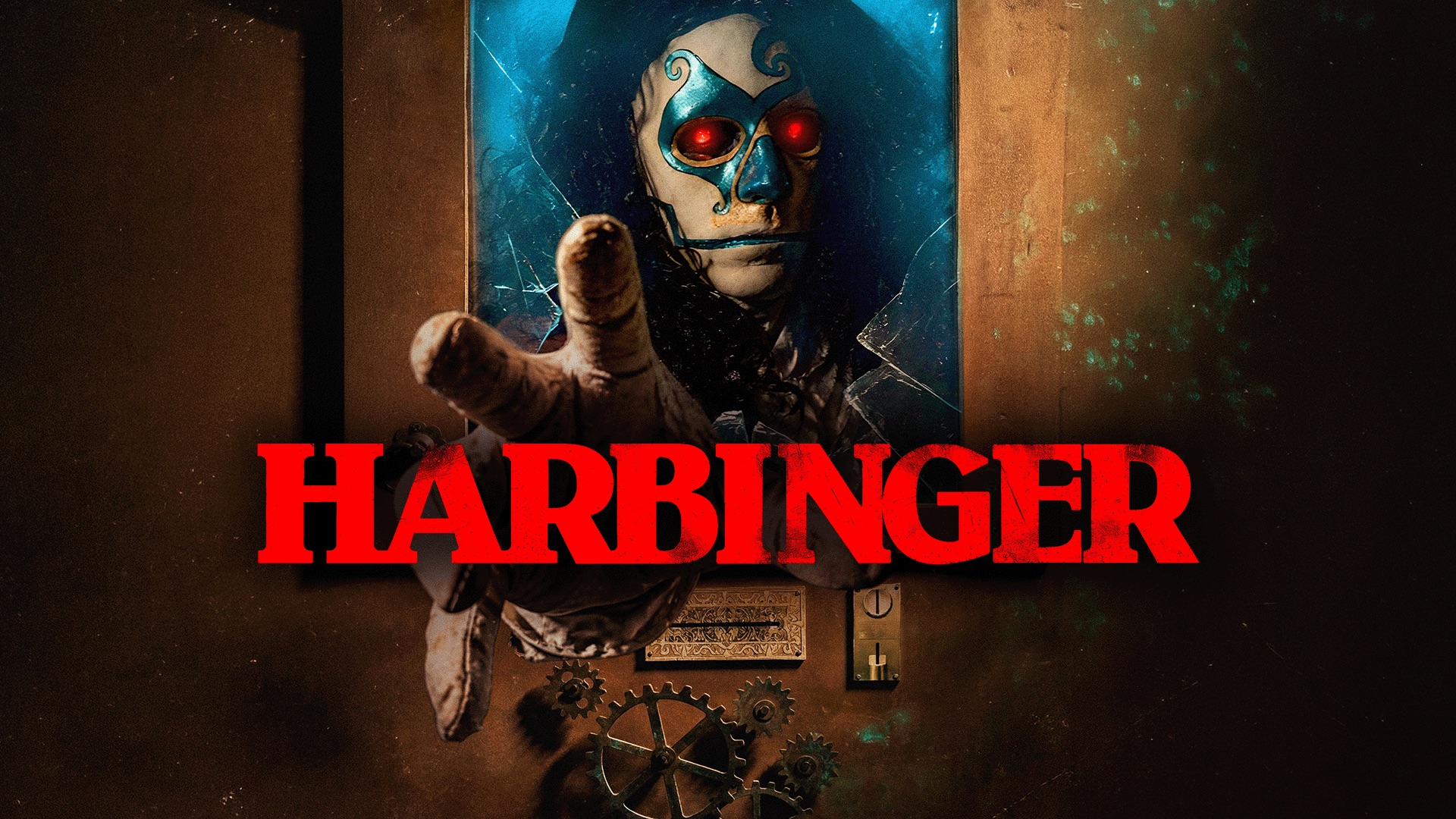
British occult horror tale Harbinger locks us in the house with a magical menace and throws away the key. Giving Suspiria vibes via fantastical color and occult leanings gone wrong, this newest release from Shogun Films gives us just one more thing to be scared of besides crazed murderers: fortune-telling automatons.
Julia, sole survivor of late serial killer Decker, is lured back to the house she shared with him for a ghost hunting TV show. The crew discover the ‘Harbinger’ – a fairground fortune telling machine that reveals their fates one by one.
Harbinger, IMDB
Julia (Jeanine Nerissa Sothcott) is mercilessly attacked by lover-turned-serial killer Henry Decker (Peter Woodward). She escapes, and Decker is killed, ending his reign of terror. Some time later, Julia is picking up the pieces of her life, trying to retain some normalcy but utterly failing. When an offer is presented to appear on a paranormal show for a lot of money, she apprehensively accepts; but as they film through the night, the past comes back with a vengeance as Decker’s Harbinger figure comes alive and starts the killing process all over again.
Being brought directly into the action is always nice, as Harbinger does. A chase scene between Julia and Decker provides the perfect set-up for this paranormal story. Julia is clearly traumatized by her experience — especially since she was romantically involved with Decker without knowing of his crimes or penchant for the occult.
Harbinger is an easy premise to follow: woman escapes death, she tries to heal, and she is brought back into danger. All the while, members of the crew are killed off one-by-one while they investigate the house Decker implemented his ritualistic killings in. While this could be a rather humdrum storyline, Harbinger adds two things that ramp up the story: hyper-vibrant color and a monster for the ages. Harbinger is steeped in dynamic reds and blues (with touches of yellows in between). Shadows and mystical items are given a whole new look, one that both begs you to come closer and warns you not to touch. As I mentioned at the start of this review, Harbinger‘s coloring was not unlike Suspiria, adding an evil whimsy and turbulent atmosphere to the whole situation.


For the Harbinger himself, I loved it! As with the usual clown/circus aesthetic, there’s something really cool — but also frightening — about fortune-telling figures. Automatons, robotic figurines and the like already feel almost alive in the way they move and interact with people. Add in cryptic tarot readings and actual magical spells and you’ve brought to life an unstoppable force in a china mask. And that’s why Harbinger is so fun; it gives us a monster that has always haunted our nightmares, but is rarely seen on screen. Movies that go the extra mile to show off the small details are always appreciated.
On that same note, I’d like to point out both the title and ending credits. Deep red sigils, choppy live-action, gritty texture, and (again), those vibrant, almost “spectre vision” flood lights really sold the paranormal aspect of the film. Credits may pale in comparison to the plot of the movie, but they shouldn’t be left to the wayside either. Harbinger made sure they both fit in well with the overall story and vibe. Plus, we got some end credit scenes as well!
Harbinger may have been a rather basic premise, but a bizarre and moody aesthetic that was so visually appealing to the eye paired with an old-world nightmare come to life is exactly what an audience member like me was hoping for. Spooks, sigils, and sacrifice make for a suspenseful film.
Harbinger is available to stream on digital today. For more information, visit Shogun Films (Instagram), Miracle Media (Instagram), and director James Crow (Instagram).