


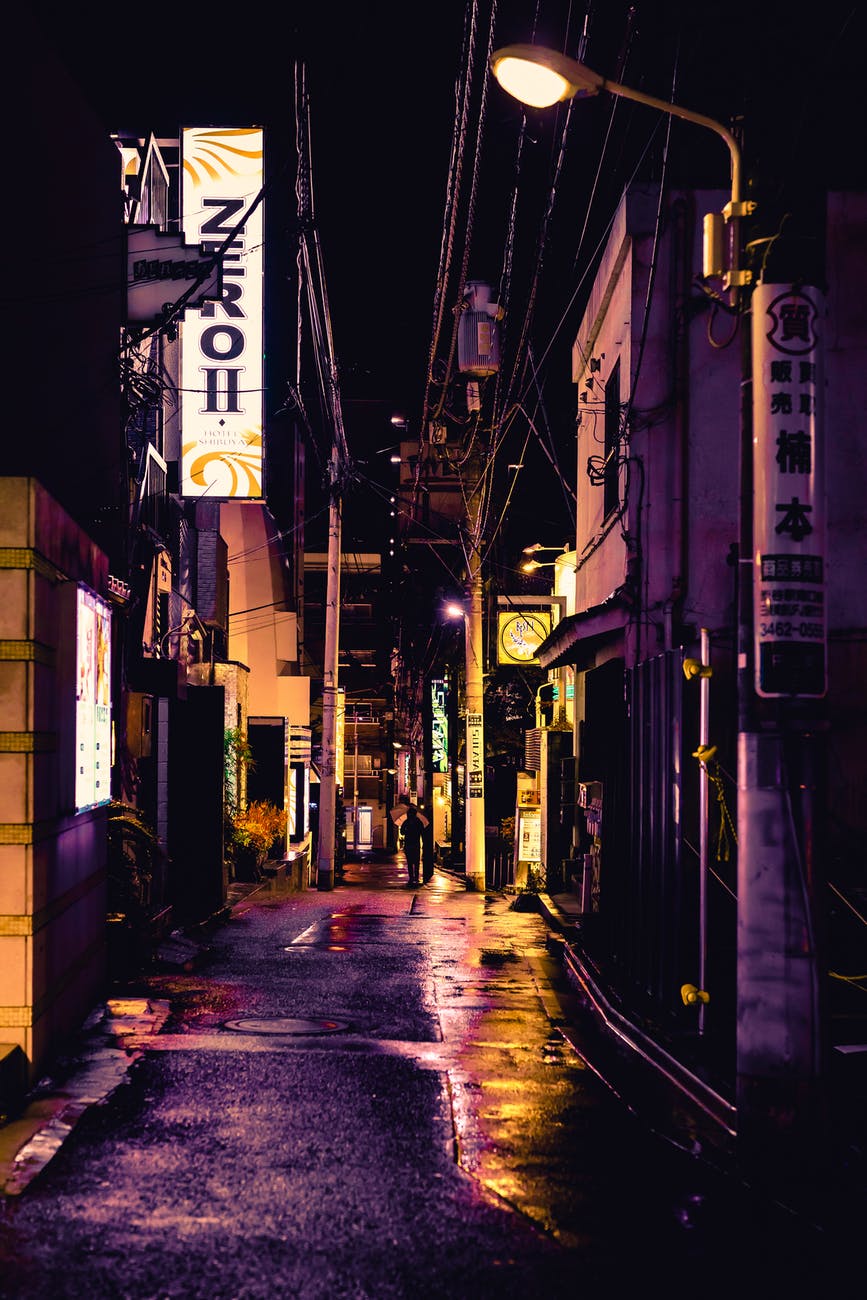
Of course we had to come back to review season 2 of Yamishibai! Click here to see our review of the first season. Again, we have episodes ranging about 4-5 minutes with bite-sized snippets of Japanese lore — along with a few that may be familiar iterations in the West. Oh and don’t forget, we get a different end title here!
Episode 1, “Taro-chan,” is about a policeman giving a safety presentation with the help of his ventriloquist dummy. You can probably guess what happens with this one; during the act, the dummy seemingly comes alive on its own, much to the dismay of the policeman (and going unnoticed by the crowd). Though it’s played out, I can never get tired of the slow realization that the dummy is talking by itself.
“Kitchen” in episode 2 is the quintessential “unseen ghost living in the house” story. A woman visiting her friend’s house sees a strange black mass emerge from the AC unit, slowly enveloping her friend and leaving no escape. Nothing too complex here; just a simple scary scene.
Episode 3, “Inside,” was one I really enjoyed. A boy finds a Russian nesting doll (Matryoshka) with different faces on each smaller doll, ranging from happy to grimacing. His mother takes the doll and starts mimicking each layer, getting more and more frightening. I loved seeing the slow descent into madness the mother shows, with the boy helpless and the dad oblivious to what’s happening. The ending is a kind of cliffhanger, making me wish this was a 10-minute episode instead of 5.
“Wall Woman” tells the story of a man who sees a monster attack the neighbor he fancies across the way. He’s infatuated by her beauty, but horrified with the monster that creeps into her window. I feel like this one too I’ve heard before. No biggie, I very much appreciate seeing tall tales come to life through animation such as this. What I liked most was the ending. No spoilers here, but it’s scary!
Episode 5, “Locker,” takes us to a high school with a rumor of a haunted doll in one of the lockers. One thing I love about Japanese culture is the presence of school and the rumors that surround and inhabit the buildings. Love and death are both prevalent in this story, as two high school crushes soon find out.
Episode 6 is about a boy and a ghost called “Nao-chan.” The boy sees the ghost every night, and soon the parents remember their old friend of the same name before a terrifying discovery comes from their newborn child. While not necessarily scary to me, the thought of ghosts taking over others’ bodies is one I would never want top happen to me!
“Capsule Toy Machine” takes Episode 7 into Twilight Zone territory. A man partakes in the infamous Japanese Gachapon machines and cannot stop himself from opening another… then another… and another. Again, not scary, but you can almost feel the compulsion the man feels to buy another surprise toy and can’t help but wonder if the same could ever happen to you.
Japanese funeral rites are the focus of episode 8, “Farewell Confession,” where guests come to do just that: confess something to the deceased as a way to bid them farewell. But one guest finds out that some confessions are unforgiveable. I’ve only been to a few funerals fortunately, one where I was within touching distance to the deceased, and this is a wild story that I’m glad will never happen to me!
One should always try strange foods they find on their travels, but episode 9’s “Ominie-san” turns that thought upside down. A town is consumed by a delicious and addicting purple mass that they eat at almost every meal. The new teacher in town is turned off by it, and doesn’t partake until she is tricked into eating it, now under the control of the black-fumed pile of “food.”

“Bugged” would probably make a lot of people itch and squirm. It’s about a man that is plagued by the thoughts of bugs that aren’t really there… until they are. I love bugs and insects, and though they can sometimes be annoying, I don’t mind them at all. So not scary for me, but still a good watch.
“Picking Up” teaches the lesson of not taking credit for someone else’s work. In episode 11, a man finds a manuscript for a story that he decides to submit to a competition for money. When at the acceptance ceremony, the crowd shows him what happens to liars and thieves. Another rather “meh” story scare-wise.
Netsuke, the title of episode 12, are small handcrafted sculptures. In this episode, a woman is given two netsuke carved faces from her grandmother but warned never to touch. When she turns them into fashionable earrings, she is followed mercilessly by two figures telling her to “give them back!” I love the air of mystery and danger she is in, and I love stories with haunted figurines.
And wrapping up season 2 is episode 13’s “Bringer Drums,” where a newlywed couple is welcomed to a town with pellet drums lined up leading to their new home. It’s said that the town’s God welcomes them when the drums begin to play, but when that happens, the couple is in danger. Love the look of the town’s God and the lead up to the end with the rows of drums playing by themselves!
Yamishibai: Theatre of Darkness keeps the chills coming by giving us more Japanese culture and tradition wrapped up in an easy-to-binge terror tale. The best part is that it’s still animated in this paper-craft style, something you’ll find doesn’t stay in the later seasons. It’s certainly appreciated here though!
Yamishibai: Theatre of Darkness is available on Crunchyroll. What was your favorite episode? Let us know in the comments!

One thought on “REVIEW – Theatre of Darkness: Yamishibai (Season 2)”