Imagine yourself lost and unable to figure your life out. You have dreams, of course, but something invisible is standing in the way. Your dreams grow stronger, though, and with a little help from a digital danger named Cupid, you are able to realize your dream… or is it a nightmare?
Writer/director Zach Lorkiewicz shares It Lives in the Screen, the story of two ladies who unfortunately get lost in the sauce between delusions of grandeur and their self-loathing thoughts about their own existences.
Two struggling artists in Los Angeles are drawn into a mysterious relationship with a computer virus named Cupid.
It Lives in the Screen, IMDB
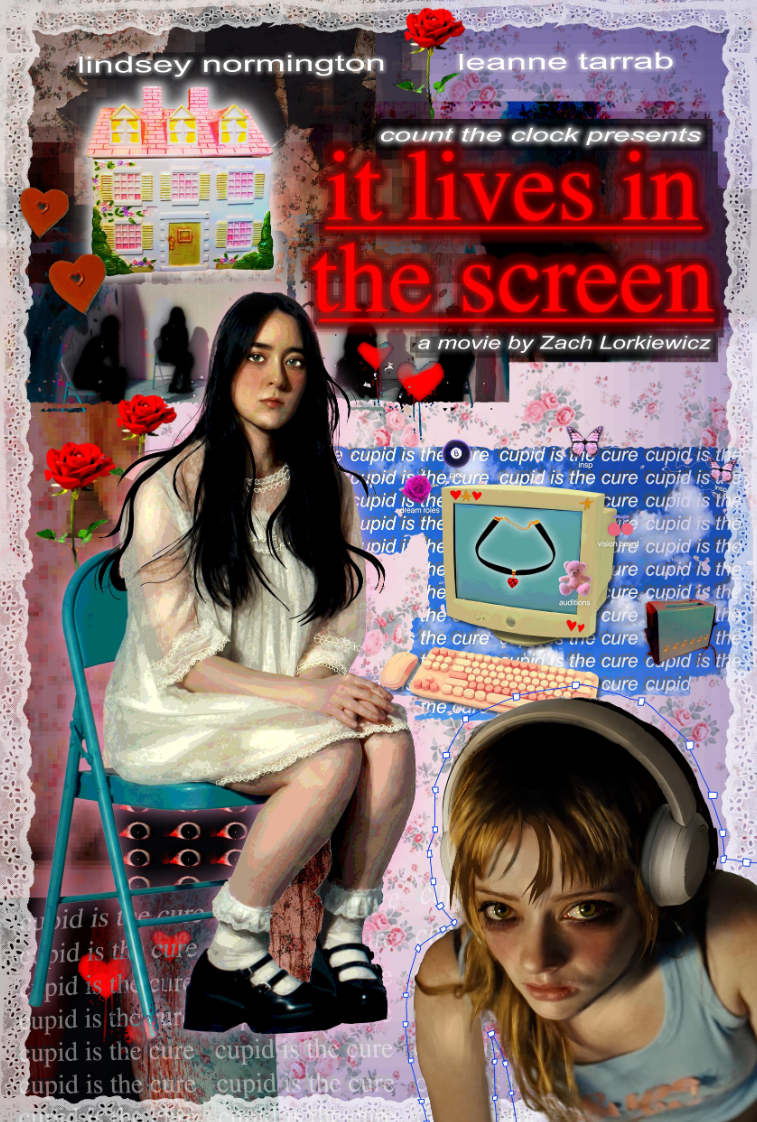
We follow Alice (Leanne Tarrab), newly-local nobody and aspiring actress auditioning for a role in a horror film, and Chloe (Lindsey Normington), a drugged out musician piecing her life back together as she struggles to see the reality of life. With both feeling inadequate and self-conscious, they try to persevere — whether that be by continuing to do their best in auditions or rebuilding burnt bridges. Things go right, and then they go very wrong; and at every turn is the voice of Cupid emanating from any nearby screen (or electronic device), urging them to continue on. But both Alice and Chloe go further and further into delusion; Alice loses track of what is an acting session and what is really happening to her, and Chloe loses her shit and hallucinates the music she wishes she could perform again. The two finally meet — after multiple instances of their lives intertwining, unbeknownst to them — and all that is left is blood, twinkling pastels, and Cupid’s embrace.
I first heard of It Lives in the Screen through Terror in the Aisles Fest, which this film was playing at; unfortunately I didn’t get a chance to see this in theaters, but after getting into contact with Lorkiewicz, they were kind enough to send me a screener. I must say that It Lives in the Screen is such a trippy, beautiful film. Not only is it shot with this pretty, psychedelic, comforting style, the music and acting are such wonderful accompaniments making this feature even more beguiling.
I wasn’t sure what to expect from It Lives in the Screen. What I got was a world easy to get lost in myself, with characters you empathize with, concepts that make you pause and think, visuals that were pleasing to the eye, and moments of calm eeriness — not your typical jumpscare fare, but moments that made you uncomfortable and on edge.
It Lives in the Screen takes two stories and weaves them together, making it a bit of a mess to try to sort out at first, but still a product you overall like. For example, this film is a knit scarf with an obvious pattern change in the middle. You see the very weird section sticking out on the scarf (where Alice and Chloe’s stories converge and you start to recognize how their minds are being altered when talking to Cupid), but stepping back, you see how it all actually fits into one glorious piece. It Lives in the Screen is mostly understandable on the first watch, but a second viewing might allow you to put together a timeline and soak it all in a bit more.
While It Lives in the Screen‘s plot is interesting enough (more than interesting, actually), what I loved the most was the millennium aesthetic that bridges the 90s and 2000s seeping in. Cupid comes forth in a pretty pink chat room and has this digital glitchiness to his voice. Chloe’s hallucinations are a kaleidoscope of blues, purples, and movements melting into each other, while Alice imagines herself in a dollhouse, a doll herself playing a role in the movie she wants to be in. It is trippy and touchable, like a poisonous flower you just want to prick.
It Lives in the Screen was soft and sad in the best way. You could feel Alice and Chloe’s desperation rising as their minds dissolved into the ether — or rather, the ethernet cord. Pay attention to the story, but stay for the aesthetic.
For more on It Lives in the Screen, follow writer/director Zach Lorkiewicz on Instagram.